Posts Tagged ‘BBC’

The BBC struggles with the concept of ‘tech bubble’

Sunday, May 8th, 2011

The BBC has a real problem with social media. It’s delighted when something new appears. It slips into the patrician role that comes naturally to broadcasters – and especially the BBC. It can express childlike wonderment – Wow! – at something new and amazing. Getting beyond that though, is where the trouble starts.

Perhaps the BBC is haunted by the idea that people simply get on and use new communication tools without “Auntie’s” assistance. The viewers typically also have much more realistic expectations of the technology than, say, pundits. So we keep hearing wonderment, and advice on how get online, a bit like a slightly mad primary school teacher.

The gears really grind when something more critical is required. This week the corporation’s news flagship Newsnight – one of the last remaining TV programmes for grown-ups – asked if there was a “tech bubble”. Investment is pouring into social media startups. Would it all end in tears?

Yet having the posed the question, the report and discussion that followed were designed to dispel understanding and analysis. Before long it had turned into a gathering of the Unicorn Preservation Society. We were even told that only people who might want to describe the web investments a “bubble” were self-serving opportunists.

Bad people, in other words, thinking bad thoughts.
(more…)

Bloggers, mind control and the death of newspapers (the Internet imagined in 1965)

Friday, May 7th, 2010

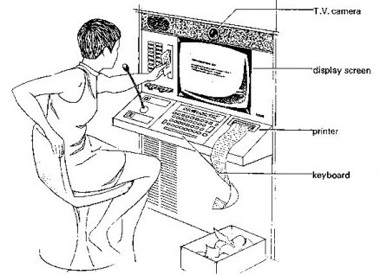
Calder invites us to have a giggle, but really it’s not a bad list at all, and compared with the (cough) ‘futurists’ who have come and gone since, Calder and the participants did a good job. Alvin Toffler was repackaging these ideas, particularly mass amateurisation, many years later. As are thousands of Web 2.0 consultants today.

Read more at The Register

Best reader comment here.

BBC investigates Richard Madeley’s PC panic attack

Monday, April 12th, 2010

Richard Madeley told the nation how the Government was going to whisk away his computer last week. The BBC has promised to investigate.

The segment on Monday’s Simon Mayo drive time heard Madeley, who is filling in for Mayo, say:

“What a pain! I only got computer literate three years ago, just as I get wised up to it, they take it away.”

We don’t yet know how many car accidents were caused by the news of mass confiscations.

Madeley was following a segment of the show about the Digital Economy Bill (now Act). The sole ‘expert’ was Professor Lilian Edwards. Edwards was simply billed as “a Professor of Law” at Sheffield University.
(more…)

BBC, big business leer creepily at orphan works

Thursday, April 1st, 2010

Big publishers and the BBC have come out to lobby for the controversial Clause 43, that part of the Mandybill that strips photographers of their historical rights.

Is that surprising? It should be, because Clause 43 is the section that deals with ‘orphan works’ – and according to the Business department BIS, the only people who are supposed to benefit from the unique powers it confers are special parties: copyright libraries, such as the British Library. These are non-commercial operations. Clause 43 was never intended act as a leg-up for tight-fisted publishers.

But here they are.

As we noted recently, Clause 43 gives new powers to use an image for which the owner can’t be found. And the prospective user doesn’t really have to try too hard. Effectively the state “nationalises” orphans and gives a free collective licence to anyone who asks.
(more…)

Panorama on the Digital Economy Bill

Tuesday, March 16th, 2010
BBC1′s flagship current affairs program was devoted to file sharing last night, and contained something to piss off a range of lobbyists.

Usually when this happens, BBC producers often conclude “they’re doing something right”, and pour themselves a large, congratulatory drink. They shouldn’t, because while the program succeeded in trying to be “fair”, it failed in its larger mission to present the issue properly – something we already understand.
(more…)

Why BBC3, BBC4?

Tuesday, March 9th, 2010

Conservative culture front bencher Jeremy Hunt is asking what’s the point of BBC3 and BBC4? It’s a good time to ask the question. In an interview with the Independent, Hunt queried why £100m was being spent, merely to attract “very, very small” audiences.

This is some way short of calling for the channels to be scrapped, as reported today. In fact, Hunt said exactly the same thing last September. It’s also less than the £172m the BBC overspent on three building projects (one of which is the £1bn – that really is billion – makeover of Broadcasting House), the National Audit Office reported last week. But it is a slow week for news.

Last week the BBC tried to pre-empt Tory cuts with a strategy review that committed to Reithian goals (ie quality programming) but which left as little as possible unchanged. 6Music was a token sacrificial lamb – and quite a badly chosen one. So Hunt is simply pointing out the obvious. The two channels are an expensive administrative overhead, if the goal is simply to have more quality.

Both channels broadcast only in the evenings, and only on digital. BBC4 is the corporation’s arts ghetto, set up to take the traditional highbrow programming away from BBC2, leaving it clear for cookery and makeover shows. While BBC3 is supposed to be … well, what exactly? The remit is to be ‘populist’ and attract young viewers, but since BBC staff rarely venture further north than Muswell Hill, it’s a strange mix of somebody’s idea of what ordinary people might like who has been away a long time, with the emphasis on the demotic. For example the ‘comedy’ has lots of swearing, to cover up the lack of wit.

There’s a funny echo from history here. North London BBC execs have great difficulty trying to imagine who a Daily Express reader might be. Churchill had the same problem.

In his memoirs, Anthony Burgess (who was raised in a Moss Side pub) describes how during World War 2, Churchill would try and engage with the working class. Having no idea who they were, or what they liked, the Prime Minister imagined that they swore a lot, so he’d steam into a crowd effing and blinding. The result was near riots.

Suits 2.0 at the BBC

Friday, February 26th, 2010

Bureaucracy is the one sure winner in the BBC’s strategic review – the suits and wonks. It’s sort of like natural selection turned upside: in a changing environment, the most useless survive.

Mark Thompson’s review, leaked to the Times today, was supposed to review the Corporation’s output, and it could have helped made inroads into this culture, but it hasn’t. And although the “cuts” are trumpeted to fall on digital operations such as web and DAB, you know what will happen next.

Of course bureaucracy has been the winner of the past ten years – the public sector middle manager on private sector wages and perks is as much a symbol of the era as was the Victorian mill owner. The BBC is no exception. Whether it’s a ‘crisis’ (Ross/Brand) or an opportunity (Web 2.0), layers of process are added at the corporation.

(more…)

BBC pulling back from the DAByss?

Tuesday, July 7th, 2009

Simply because Tim Davie, the BBC’s new radio chief, has a background in advertising and marketing, that isn’t a reason to assume everything he says is a lie. It’s more charitable to say he’s well practiced in the dark acts of spinning, having learnt the trade at Pepsi and Proctor and Gamble. And so you might want to take the explanation he offered on DAB strategy last week with a large dose of organic salt.

For the first time, a top BBC executive admitted that DAB radio isn’t inevitable. The Director of BBC Audio and Music told Radio 4′s Feedback programme that “since I have arrived at the BBC, I certainly haven’t seen it as inevitable that we move to DAB.”

Davie continued:

“We do believe that, if radio doesn’t have a digital broadcast platform, it will be disadvantaged. I’m pretty convinced of that logic. What I’m not saying is that we have to move at 2015 if we haven’t delivered the thresholds – the right levels of listening to digital radio and to DAB. I don’t think we are on a course that is unstoppable to 2015, although we are pretty committed to a DAB switchover over time.”

Davie was responding to a deluge of negative responses unleashed by Carter’s Digital Britain report. The report, the nation’s Media Correspondents told us, would order analog radio to be switched off in 2015. Incorrectly, as it turned out. Emboldened by this, it was suddenly open season on DAB. The Tories have sniffed a vote winner, although shadow culture secretary Jeremy Hunt shows the same reluctance to grasp the underlying problems.

Radio 4′s Today programme sent its radio car to the remote location of er, BBC Television Centre, and discovered DAB reception “is more irritating than Norman Collier’s broken mic routine”. That is, if they could get it at all. Back in the studio, former TalkSport owner Kelvin McKenzie listed more DAB closures and concluded: “There are no advertisers out there, no listeners out there. DAB is a technology whose day is done.”

Davie was merely trying to defang the backlash. Listeners don’t like to feel bullied, and especially not bullied onto a technology that is perceived to offer only disadvantages. No one talks about the much-vaunted crystal clear reception any more, or choice, or whizzy new features.

“What we might be seeing is the opening salvo of an action folder marked ‘Possible DAB Downgrade/Exit Strategy’”, mused the radio analyst Grant Goddard. “The nuclear button might never have to be pressed, but it’s always useful to know where the exit doors are and how you are going to reach them, however little you might want to think about the DAB plane going down in flames.”

I’m not so sure.

Carter’s report failed radio by ducking two serious areas. DAB’s problems are both technological and financial, and the two are interlinked. More modern codecs offered by DMB (the DAB technologists’ preferred route) or DVB-H could cut the transmission costs, lead to cheaper sets, and give us better and more complete reception. This required something stronger than what Carter proposed – an airy desire that sets should be forward compatible somehow.

As for the financial issues which beset commercial radio, it’s hard to see how anything short of a compulsory nationalisation of Arqiva and chopping up the spectrum could help. (Arqiva is where the BBC and the Independent Broadcasting Authority’s transmission facilities, along with DTELs, the Home Office’s radio network for defence and emergency services, have ended up).

The BBC doesn’t want half of its audience to disappear overnight, either (one of the two switchover criteria is 50 per cent of listeners), so here we see Davie steering it away from backing any kind of commitment. But nor does the BBC want a fragmented world where the audience wanders off to discover more engaging material, as they have since the very beginning of radio. That’s what Davie means by “a digital broadcast platform” – he means one single, nationwide, one-to-many broadcast standard, with presets in all the receivers. The sheep must not stray from the fold.

So we’re muddling along as before, without the carriage costs being addressed, and without a firm roadmap for DAB’s successors. One thought ought to keep radio executives awake at night. By 2015, IP networks will be fully capable of IPv6 multicast, as we’ll be well into 4G (LTE) deployment by then. If half of the terrestrial radio is audience is disenfranchised overnight, the mobile operators will only be too happy to offer them – and advertisers – a home from home.

BBC's science: 'Evangelical, shallow and sparse'

Friday, May 22nd, 2009

The BBC’s environmental coverage has come under fire from a former science correspondent. Award-winning author and journalist David Whitehouse says the corporation risks public ridicule – or worse – with what he calls “an evangelical, inconsistent climate change reporting and its narrow, shallow and sparse reporting on other scientific issues.”

Whitehouse relates how he was ticked off for taking a cautious approach to apocalyptic predictions when a link between BSE in cattle (“Mad Cow Disease”) and vCJD in humans was accepted by government officials in 1996. Those predictions “…rested on a cascade of debateable assumptions being fed into a computer model that had been tweaked to hindcast previous data,” he writes.

“My approach was not favoured by the BBC at the time and I was severely criticised in 1998 and told I was wrong and not reporting the BSE/vCJD story correctly.”

The Beeb wasn’t alone. With bloodthirsty glee, the Observer newspaper at the time predicted millions infected, crematoria full of smoking human remains – and the government handing out suicide pills to the public. Whitehouse feels his caution is now vindicated. The number of cases traced to vCJD in the UK is now 163 – and the only suicides were farmers who had feared their livelihoods destroyed.

Writes Whitehouse:

“Reporting the consensus about climate change…is not synonymous with good science reporting. The BBC is at an important point. It has been narrow minded about climate change for many years and they have become at the very least a cliché and at worst lampooned as being predictable and biased by a public that doesn’t believe them anymore.”

(more…)

The BBC, Thermageddon, and a Giant Snake

Sunday, February 15th, 2009

a giant snake

Listeners to BBC World Service’s Science in Action program got a nasty surprise last week. In the midst of a discussion about the large snake fossil, a scientist dropped this bombshell:

“The Planet has heated and cooled repeatedly throughout its history. What we’re doing is the rate at which we’re heating the planet is many orders of magnitude faster than any natural process – and is moving too fast for natural systems to respond.”

Hearing this, I did what any normal person would do: grab all the bags of frozen peas I could find in the ice compartment of my refridgerator, and hunker down behind the sofa to wait for Thermageddon.

Hours passed. My life flashed before my eyes a few times, and a few times more. But then I noticed that the house was still there, and so was the neighbourhood. And so was I!

(more…)